Wholesale textile sourcing from Pakistan works through eight connected stages: defining your product specifications, shortlisting verified manufacturers, requesting samples, negotiating price and terms, placing a trial order, running in line quality checks, completing a final inspection before shipment, and managing freight and customs clearance into your country. Each stage exists to reduce a specific risk, and skipping any one of them is usually where buyers lose money. The rest of this guide breaks down exactly what happens at each stage and what you should be doing at every point.
Why Pakistan Keeps Showing Up on Buyers' Shortlists
Before getting into the process, it helps to understand why so many hotel groups, distributors, and import businesses keep circling back to Pakistan for bulk textiles. The country is one of the largest cotton producers in the world, and unlike markets that import raw material, Pakistan grows, spins, weaves, dyes, and stitches under one roof in many cases. That vertical integration is the real reason pricing stays competitive even as global freight and cotton prices swing. Faisalabad in particular has earned the nickname the Manchester of Pakistan because of the sheer density of spinning mills, weaving units, and finishing houses concentrated in one industrial zone.
That said, Pakistan is not a plug and play market. The ecosystem includes genuine factories, trading houses acting as middlemen, and a fair number of listings on platforms like Alibaba or TradeKey that are neither. Knowing how to move through the sourcing process protects you from the second and third category.
Step 1: Lock Your Specifications Before You Contact Anyone
The single biggest mistake first time buyers make is reaching out to suppliers with a vague idea instead of a spec sheet. Before you message a single factory, you should know:
- The exact product (bed sheets, terry towels, duvet covers, table linen, etc.)
- GSM or fabric weight (grams per square meter, since this is what actually drives pricing more than thread count)
- Weave type (percale, sateen, twill) and fiber blend (100 percent cotton, cotton polyester, CVC)
- Size specifications and tolerances
- Target quantity per order and expected reorder frequency
- Any certification requirements (OEKO-TEX, ISO 9001, Sedex, BSCI)
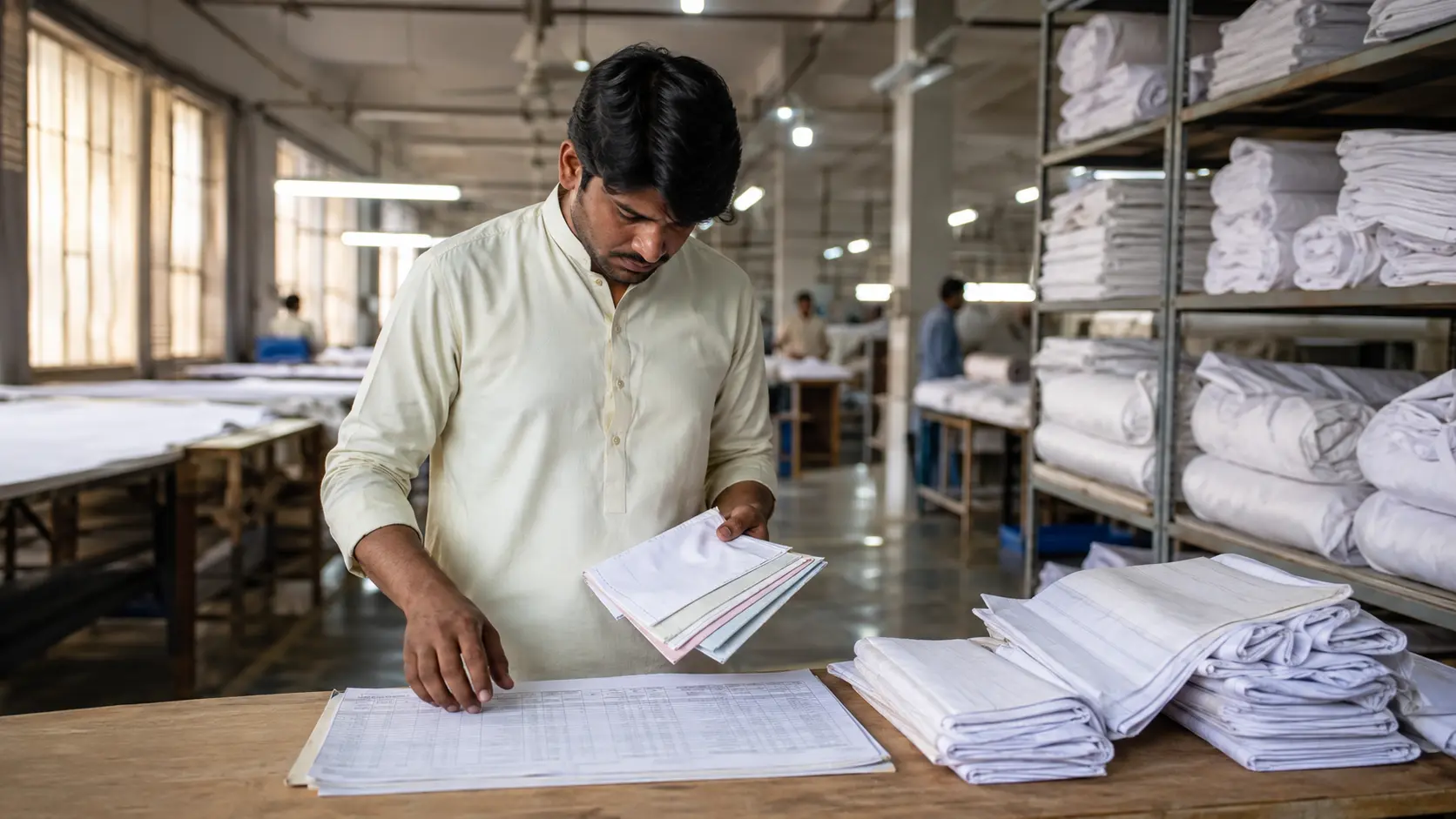
Suppliers quote faster and more accurately when you hand them a locked spec sheet rather than a general description. It also filters out factories that cannot actually produce to your standard.
Step 2: Shortlist and Verify Real Manufacturers
Once your spec is ready, the shortlisting stage begins. There are three common paths into the Pakistani textile market, and choosing between them is really a choice between price, control, and risk. If you are still deciding which route fits your business, our guide on sourcing agent versus manufacturer breaks down the tradeoffs in more depth.
Direct factory contact. You work straight with a mill in Faisalabad, Karachi, or Lahore. This gives you the best pricing but requires more vetting on your end.
Sourcing agents or agencies. A local agent manages factory relationships, quality checks, and logistics on your behalf, usually for a service fee or small margin. This reduces risk for buyers who cannot travel or do not have the bandwidth to manage multiple factories.
Trading companies. These act as a single point of contact but subcontract production to various mills. Pricing here often includes a markup and you lose direct visibility into who actually made your goods.
Whichever route you choose, verification matters more than the pitch. Ask for the company's TDAP (Trade Development Authority of Pakistan) export registration number and confirm it independently. Request a live video call of the actual production floor rather than stock photos. If a supplier resists a video call or an on site audit before a meaningful order, treat that as a warning sign, not a negotiating point.
Step 3: Request Samples and Read Them Critically
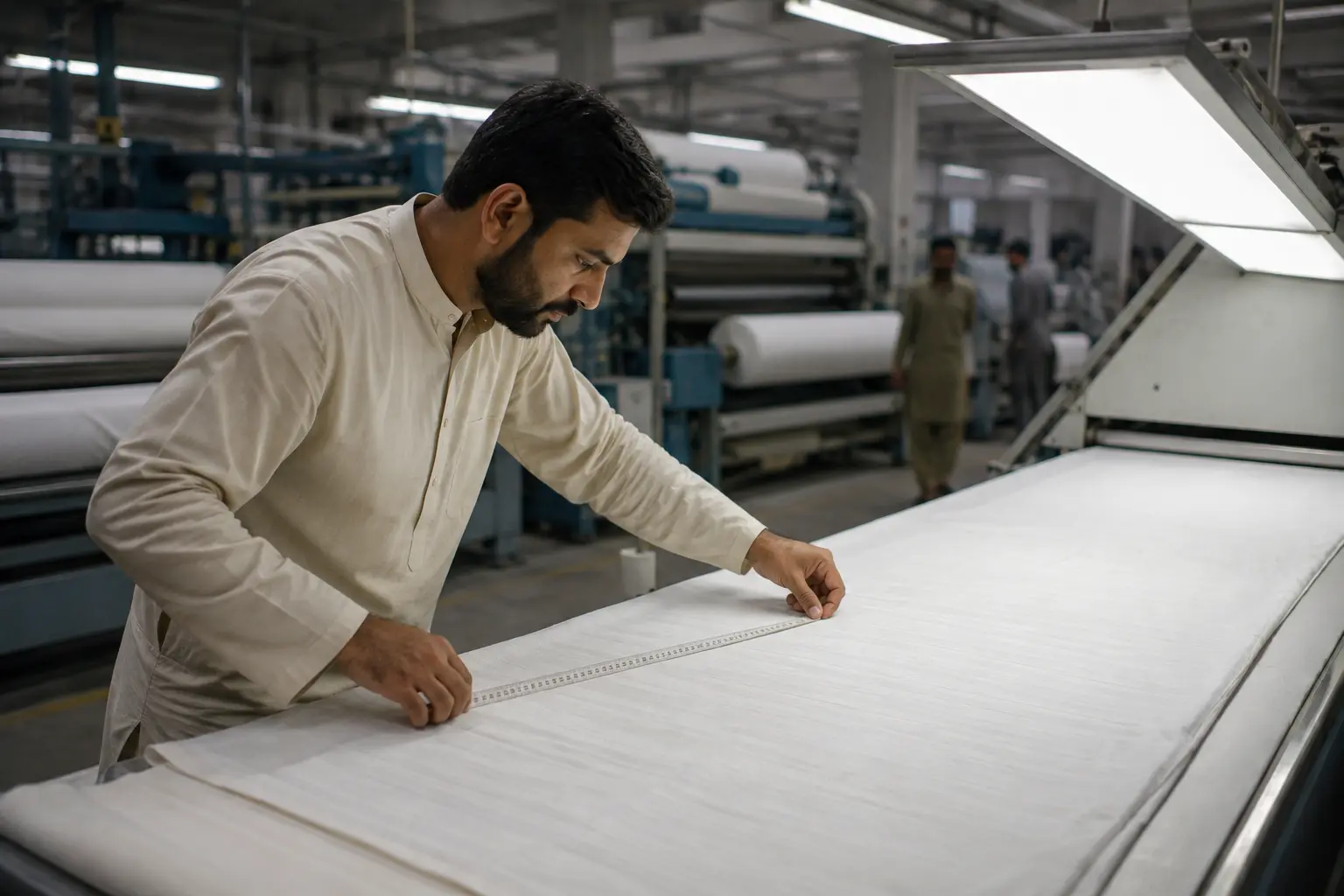
No serious wholesale order should happen without a physical sample first. A sample tells you three things a photo never will: the actual hand feel of the fabric, the true GSM (which you can weigh yourself), and the finishing quality of stitching, hemming, and print or embroidery work if applicable.
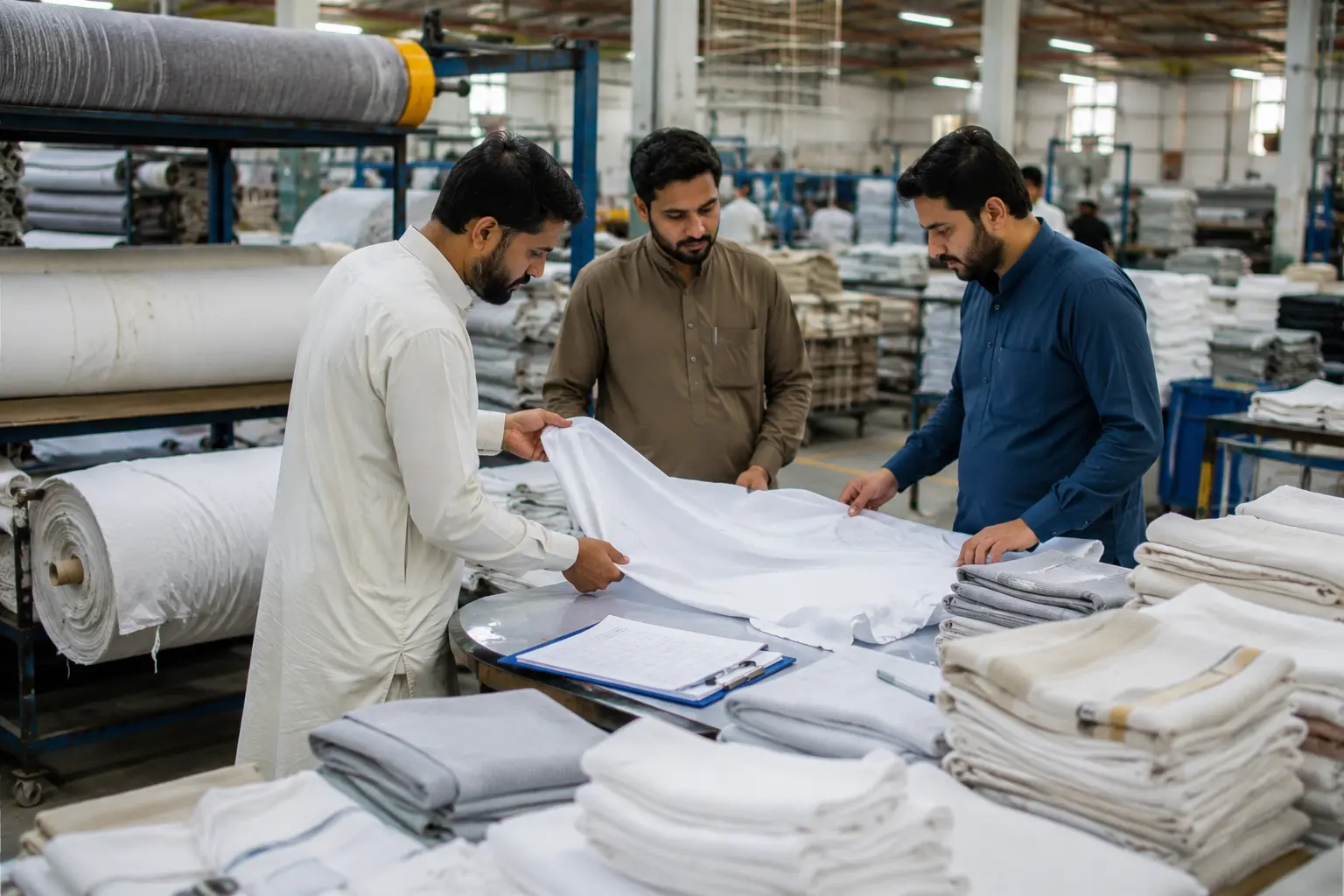
Expect to pay for samples and courier costs, especially for custom specifications. Factories that offer free samples with no questions asked on a genuinely custom order are sometimes cutting corners elsewhere to absorb that cost. Compare the sample against your spec sheet line by line rather than judging it by feel alone.
Step 4: Negotiate Price, MOQ, and Payment Terms Together
Price negotiation in Pakistani textile sourcing rarely happens in isolation. It is tied to three other variables: minimum order quantity (MOQ), payment terms, and lead time. A factory might hold firm on price but flex on MOQ, or offer better pricing in exchange for a longer production window.
Common payment structures include a percentage deposit (often 30 to 50 percent) with the balance due before shipment or against shipping documents, letters of credit (LC) for larger first time orders, and partial payment schedules tied to production milestones. Avoid sending a full advance payment to a new, unverified supplier regardless of how attractive the pricing looks.
Step 5: Place a Trial Order Before Committing to Bulk
Even after samples and negotiation, experienced buyers place one trial production run before scaling to a full container order. This is smaller than your eventual bulk order but large enough to be produced on the same machinery and under the same conditions as your real order. It exposes problems that a hand made sample cannot, such as shade variation across a larger dye batch or shrinkage after the first industrial wash.
Step 6: In Line Quality Control During Production
Reliable manufacturers run quality checkpoints during production, not just at the end. These typically fall into three checkpoints: fabric inspection at the weaving stage, color and shade consistency checks after dyeing, and stitching or seam checks during cut and sew. If your order is large enough, you or your agent can request to be present, virtually or physically, at each checkpoint rather than waiting until the goods are finished.
Step 7: Final Random Inspection Before the Container Ships
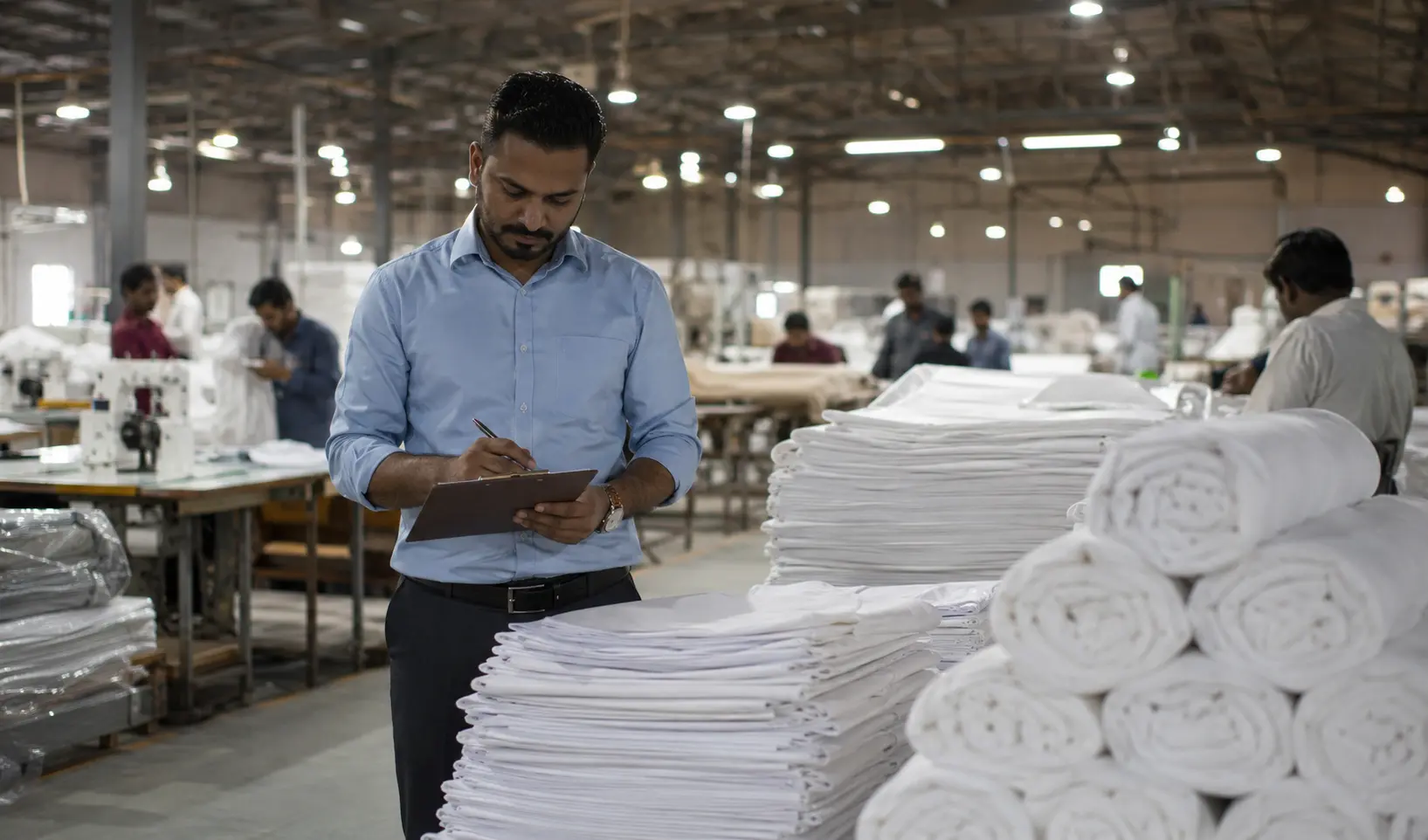
The Final Random Inspection, often called FRI, happens once production is complete and goods are packed, but before the container leaves the factory. An inspector checks a statistically valid random sample of the full order against your original specification: measurements, GSM, colorfastness, stitching, and packaging. This is your last checkpoint to catch defects before the goods are on a vessel headed to your port, where returns become far more expensive and slower to resolve.
Step 8: Shipping, Documentation, and Customs
Once the FRI is cleared, the shipment moves into logistics. This stage involves agreeing on Incoterms (commonly FOB or CIF for Pakistani textile exports), arranging a freight forwarder, and preparing export documentation including the commercial invoice, packing list, bill of lading, and certificate of origin. On your end, customs clearance in your destination country will require matching documentation and, depending on your country, payment of applicable duties.
Typical Cost Overview: What Actually Sits Inside the Price
Buyers new to Pakistan sourcing often see a quoted per unit price and assume that is the full cost. In reality, a wholesale textile quote is built from several layers stacked together: raw yarn or fabric cost, weaving or knitting charges, dyeing and finishing, cut and sew labor if the product is stitched, packaging, inland freight to the port, and the factory's margin. On top of the ex factory or FOB price, the buyer separately carries ocean freight, marine insurance, destination customs duty, and inland delivery in their own country. Understanding this breakdown matters at the negotiation stage, because a supplier who seems more expensive on paper may already be including services (like FRI inspection or export documentation handling) that a cheaper quote leaves out entirely. Always ask a supplier to itemize their quote rather than accepting a single lump sum figure, since that is the only way to compare two offers on equal terms.
Common Mistakes That Derail Pakistan Textile Sourcing
Buyers who run into trouble usually skip one of the steps above, most often the video verification of the factory, the trial order before scaling to bulk, or the final inspection before shipment. Paying full advance to an unverified supplier and accepting a supplier's word on GSM or thread count without independent testing are the two most expensive shortcuts buyers regret.
Frequently Asked Questions
How long does wholesale textile sourcing from Pakistan usually take from first contact to shipment?
For a straightforward reorder with an existing supplier, three to five weeks is typical. For a first time order with a new factory, including sampling, trial production, and a full inspection cycle, eight to twelve weeks is a more realistic window.
What is the minimum order quantity for wholesale textile sourcing from Pakistan?
MOQs vary widely by product and factory, from a few hundred pieces for standard items to several thousand meters of fabric for custom weaves. Many Faisalabad based suppliers will negotiate MOQ downward for buyers willing to commit to repeat orders.
Is it safe to source textiles from Pakistan without visiting in person?
Yes, provided you replace the in person visit with equivalent verification: a live video walkthrough of the factory, a third party inspection service for the final random inspection, and a trial order before committing to a full container.
What documents should a legitimate Pakistani textile exporter be able to provide?
A valid TDAP export registration, a company profile with verifiable factory address, relevant compliance certificates if you require them (OEKO-TEX, ISO 9001, Sedex, or BSCI), and a willingness to issue proper export documentation including a certificate of origin.
About the Author
Usama Zafar is the Founder of Twiltex, a wholesale textile sourcing and export company operating out of Khurrianwala, Faisalabad since 2004. Over two decades of running production floors, managing quality checkpoints, and coordinating export shipments have shaped how he writes: practical, spec driven, and focused on what actually goes wrong when hotel groups, distributors, and import businesses source bulk textiles from Pakistan. He works directly with buyers across the UK, USA, and Europe, from first sample to final container.
Learn more at Twiltex.com.